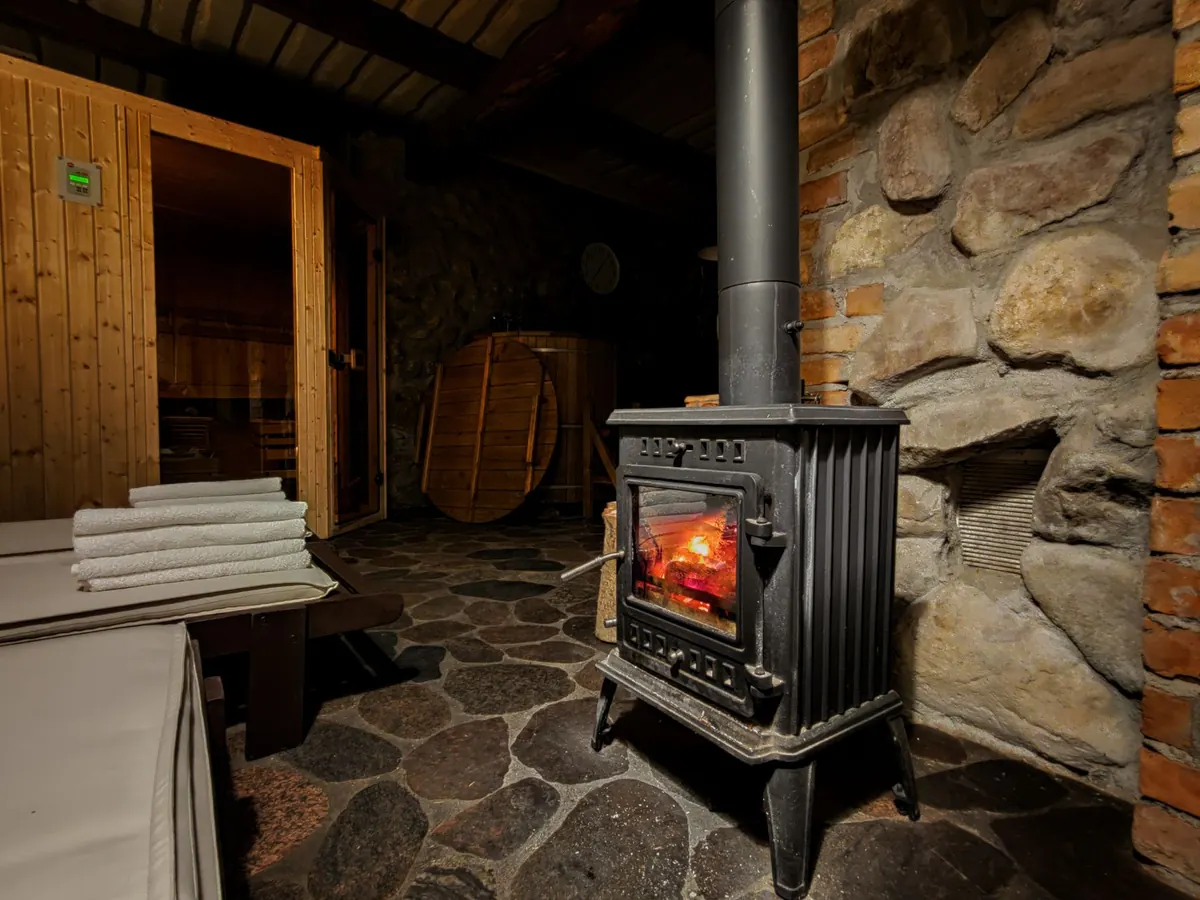
A house at the end of a long track plays by its own rules. No mains gas, sometimes no mains electricity, and a winter that arrives three weeks earlier than it does in the valley. When it comes to keeping the place warm, the choice usually narrows to two: a wood-burning stove with a flue through the roof, or a heat pump wired into whatever power you can make and store. Both work. Neither is a straight swap for the other.
A wood stove is a small, intense heat source. Burn fuel in the firebox and heat comes off the stove body and the flue, warming the room it stands in. Radiant heat travels in straight lines, so the person in the wrong chair feels cold while the wall thermometer disagrees. To move that heat around the house, you leave doors open or run a fan.
A heat pump moves heat rather than making it, pulling warmth from the air, the ground or a water source and pushing it inside with a compressor and pumps. Because it moves existing heat, it can deliver more heat energy than the electricity it consumes — though that advantage shrinks in a hard frost. Heat pumps also prefer to run low and steady, and suit underfloor heating or generously sized radiators in a house that holds its warmth. A stove is the opposite: quick, fierce, and perfectly happy in a draughty stone cottage, provided you keep feeding it.
Wood must be gathered, split, stacked and dried, and it occupies space all year round, not just in January. Season it for a year or two, and store it where air moves rather than in a sealed shed. Wet wood sends most of its heat up the chimney and lines the flue with tar.
A heat pump has no log store, no splitting and no ash — but it has an electricity bill, and off-grid that power comes from solar panels, a wind turbine, micro-hydro, a generator or a battery bank. You trade a woodshed for battery capacity.
The useful comparison isn't appliance against appliance. It's the cost of a kilowatt-hour of delivered heat across a year, plus the labour involved.
With wood, everything depends on where the fuel comes from. A few acres of mixed woodland and a chainsaw make heating cheap at the price of your weekends. Kiln-dried bags bought from a forecourt are among the dearest ways to heat a house. Add sweeping, flue upkeep and the occasional replacement part.
With a heat pump, cost turns on the efficiency it achieves in your house and the price of the electricity feeding it. Generator power is expensive heat. Solar is cheap in theory, but produces least exactly when you want warmth most. Before committing serious money, talk to an installer who works with off-grid systems, and get a second opinion.
This is where the two options part company most sharply. A stove needs almost no electricity: a small fan, a match. It will heat the room through a week-long power cut — which off-grid is less a cut than a flat battery bank.
A heat pump is an electrical appliance first and a heating system second. It draws its heaviest current on cold mornings, exactly when the battery bank is low after a long night and solar output is at its weakest. If a generator is your supply, it will be running more often and for longer.
None of that rules heat pumps out. A property with steady micro-hydro, a large array, thick insulation and underfloor heating can run one well. The electrical side simply has to be designed first rather than bolted on afterwards.
Design the power supply first. The heating system is the easy part.
Ash to empty, logs to carry, fires to lay and light, glass to clean. Chimneys need sweeping at least once a year, and more often if you burn heavily or burn softwood. A neglected flue is a genuine fire risk, so don't let it slide.
Filters to clean, an outdoor unit to keep clear of leaves and snow, an annual service. It holds a steady temperature without anyone getting up at six to feed it, and it produces no ash, smoke or mess. The trade is labour against electricity: wood asks for your time, a heat pump asks for a robust power supply and a well-insulated house.
Start with

A practical checklist of the rural waste mistakes that cost you time, money and good neighbourly relations — from...

A practical guide to when muck goes on, how to get it right for your soil, and the local rules worth checking first.

Hedges, post-and-rail, stock netting and dry stone walls each suit different jobs — here is how to pick the one your...


A cozy nook for countryside living and nature..
