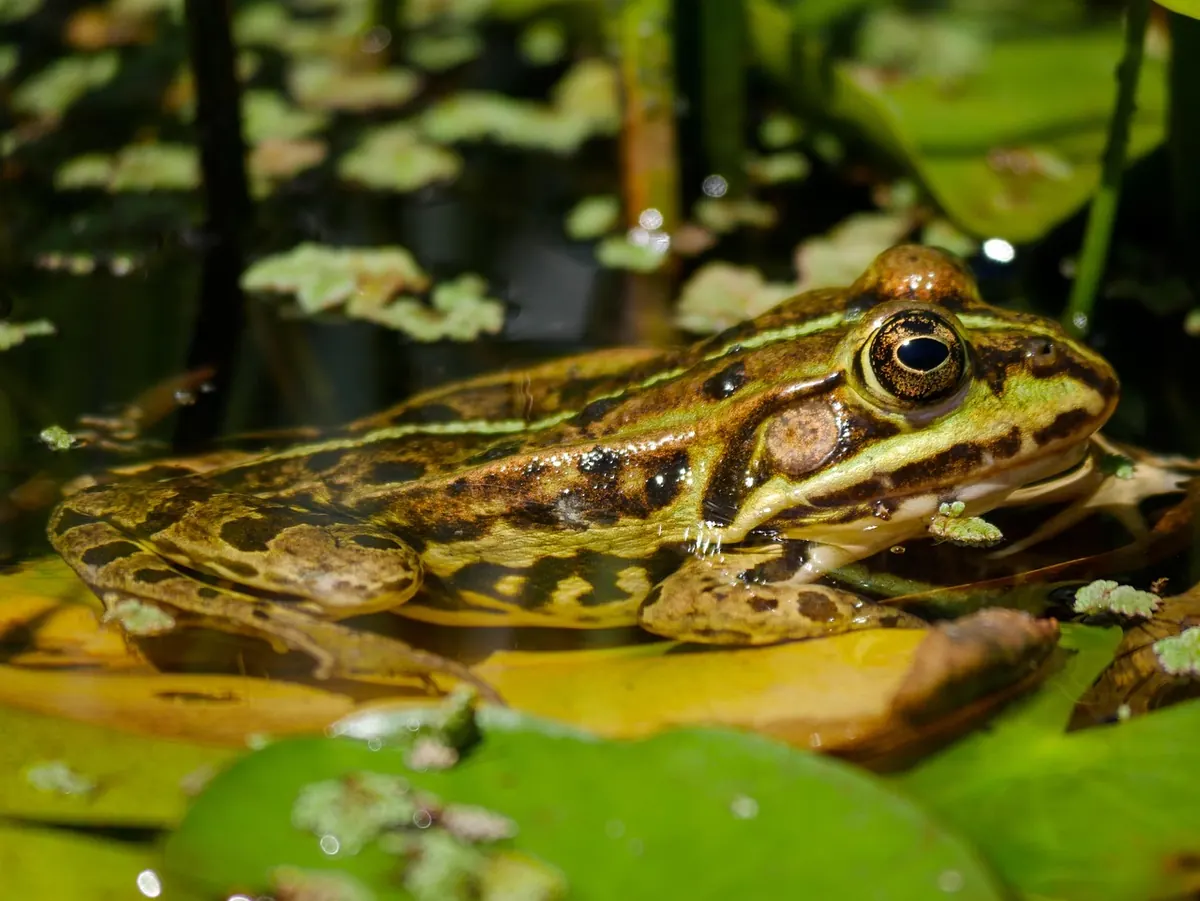
A pond is the best thing you can add to a rural garden. Not a rigid basin with a fountain, but a shallow, muddy-edged hollow that fills with rain and holds it — the sort frogs find within weeks. If your ground has clay in it, you can build one without spending anything on butyl rubber. You dig, you puddle the clay, and the weather and the plants finish the job.
The one thing a liner-free pond cannot forgive is the wrong soil. Settle that question first and the rest is spadework and patience.
Clay is the whole trick. Squeeze a handful of damp subsoil — the pale, sticky stuff beneath the topsoil — and roll it into a sausage. Flatten it between thumb and forefinger and push. If it forms a ribbon three or four centimetres long before breaking, you have enough clay to work with. Under two centimetres and you are dealing with sand or silt.
The blunt test is better still. Dig a hole a spade deep where you want the pond, fill it with water, and check after twenty-four hours and again after three days. Water that drops a little has a chance. Water that vanishes overnight will not hold a pond, whatever you do to it. On chalk, gravel or sand, a clay blanket or a liner is the honest answer — or a bog garden planted with marsh marigold, which still brings in the frogs.
Ignore the perfect circle. An irregular outline, with a couple of lobes and one long curving side, looks as though it has always been there.
Depth matters more than width. Leave a shallow shelf at 20–30cm around part of the edge for marginal plants, then drop to 60–80cm in the middle, or 90cm if your winters bite hard. That deeper water stays liquid when everything around it freezes, and it is where frogs and newts wait out a cold snap. Roughly a third shallow and two thirds deep works well.
Keep one side as a gentle slope easing into the water — a beach. Hedgehogs, birds, voles and frogs all need a way out, and a vertical clay wall is a trap. If the rest of the edge is steep, lay a few stones or a plank as an escape ramp.
Two metres by three is generous; even a metre and a half across is worth the effort. As you dig, keep topsoil on one side and clay subsoil on the other. Barrow the topsoil to the vegetable bed. The clay is your lining, so pick out sharp stones and roots as you go.
Puddling is the old method and it still works: break the clay down, wet it, and work it into an unbroken skin.
The common mistake is digging in a dry spell and leaving the puddled clay to bake while you fetch a cup of tea. Work in spring or early autumn, when the ground is damp but not sodden.
If your clay is marginal, a clay blanket product or sodium bentonite worked into the base can save the project. Follow the supplier's rate and mixing instructions rather than guessing.
Let the clay settle for a few weeks before planting, then choose natives to suit each shelf.
Skip fish. They eat tadpoles and larvae, stir the silt and undo much of what you are trying to build. Avoid non-native invasives such as floating pennywort and parrot's feather, and check local guidance before introducing anything that spreads freely — some species are restricted for good reason.
Plants earn their keep. Roots and falling leaves gradually tighten the base, so a well
Photo: garten-gg / Pixabay
A practical checklist of the rural waste mistakes that cost you time, money and good neighbourly relations — from...
A practical guide to when muck goes on, how to get it right for your soil, and the local rules worth checking first.
Hedges, post-and-rail, stock netting and dry stone walls each suit different jobs — here is how to pick the one your...


A cozy nook for countryside living and nature..
