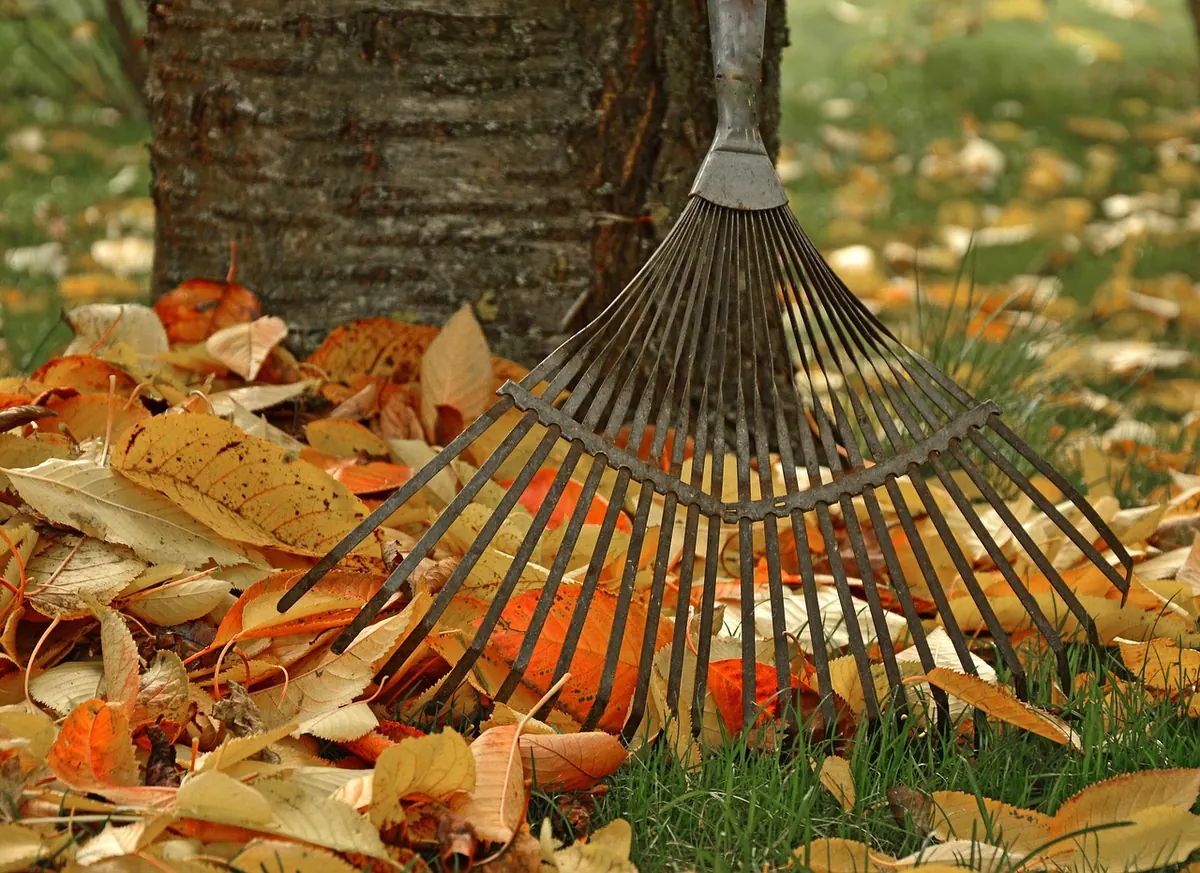
Autumn in a cottage garden rarely arrives quietly. One week the hedges are still green and the last courgettes are swelling; the next, the wind has stripped the damson tree and the lawn has vanished under a copper blanket of leaves.
It is the best working month of the year, all the same. The soil is still warm, the light is soft, and the jobs you do now decide what the garden looks like when it wakes in March. Work through this list at your own pace — a couple of tasks each weekend is plenty.
Rake the lawn weekly once the fall begins. A thin scattering does no harm; a thick, wet mat smothers grass and leaves disease patches you will still be repairing in April. Paths need clearing too — leaves on paving turn slick within a day of rain.
What you rake up is worth keeping. Build a leaf bin from four stakes and a length of wire netting, or stuff damp leaves into old compost sacks, punch a few holes in the sides and stack them behind the shed. Soft leaves such as lime and apple rot down in a year; oak and beech take two. The result is leaf mould, the best soil conditioner you can make for nothing.
Leave one quiet pile in a corner for hedgehogs and overwintering insects, but keep it away from the house wall and clear of paths. On borders, scatter leaves lightly around shrubs rather than heaping them over the crowns of small alpines.
Nothing says cottage garden like bulbs naturalised in grass. A neat row of tulips looks like an allotment; a ragged drift looks as though it has always been there. Tip a handful from a bucket and plant them where they fall — the scatter always reads better than anything planned on paper.
Depth matters. As a rule, plant each bulb three times its own height deep: crocus and grape hyacinth at around 8cm, daffodils and most alliums at 12 to 15cm. Tulips are best left until November, when cold soil reduces the risk of the fungal rots that take them.
On heavy clay, drop a handful of grit into each hole so water does not sit around the bulb. Mark the drifts with twigs, or you will fork through them in spring. Where squirrels dig, lay chicken wire over the planted ground, peg it down and lift it in February.
The old advice to cut everything to the ground in October has cost the garden a lot of winter structure and the birds a lot of food. Cut only what has finished or looks poor.
Where a border has collapsed entirely, cut it in stages — half now, half in late February — so something always gives cover.
Spread five to eight centimetres of well-rotted manure or garden compost over empty borders and around shrubs, keeping it a hand's width clear of stems and crowns so nothing rots. Worms will do the digging for you over winter.
On the vegetable patch, sow a green manure on bare ground — field beans, grazing rye or phacelia all hold nutrients and stop winter rain washing topsoil away. And leave heavy clay alone when it is wet. A fork in a sodden clay bed destroys the structure you have spent years building; wait for a dry spell, or wait for spring.
Damp air and dirty metal ruin tools, not hard work. Set aside one wet afternoon and work through them properly.
Terracotta cracks when the water inside it freezes and expands, so empty large pots and store them dry, or raise them onto feet and wrap them in hessian or bubble wrap. Roots in containers freeze far faster than roots in open ground, so group pots against a sheltered wall and insulate the gaps between them with straw or crumpled newspaper.
Move olives, bay and citrus under cover before the first hard frost, but do not bake them in a heated room — a cool, bright porch or unheated greenhouse suits them better and keeps pests down. Outdoors, drain the taps, lag exposed pipes and check that water butts have their lids on and overflows clear. If you have a greenhouse, wash the glass inside and out, clear the gutters and check the vents still open. Winter light is precious, and grimy glass throws away a good part of it.
Before the month is out, walk the garden at dusk with a notebook and no tools. Note the gaps you mean to fill, the plant that sulked all summer, the corner that floods every November. Autumn is the honest season: with the leaves down you can see the bones of the garden, and next year's plans are always better for being made now.
Then put the notebook away and get inside. Pick three jobs from this list you know you will actually finish and let the rest wait. A cottage garden has come through a hundred winters without being perfect, and it will manage another.
Photo: Peggychoucair / Pixabay

A practical checklist of the rural waste mistakes that cost you time, money and good neighbourly relations — from...
A practical guide to when muck goes on, how to get it right for your soil, and the local rules worth checking first.
Hedges, post-and-rail, stock netting and dry stone walls each suit different jobs — here is how to pick the one your...


A cozy nook for countryside living and nature..
